When to Replace Your Water Heater: Signs, Costs, and Tank vs. Tankless
Knowing when to replace your water heater can prevent sudden cold showers, water damage, and expensive emergency installs. Most homeowners wait until failure, but clear warning signs, predictable lifespans, and rising operating costs often signal replacement years earlier. This guide explains exact signs to watch for, what replacement really costs, and a side-by-side decision framework for tank vs. tankless water heaters—so you can replace on your terms.
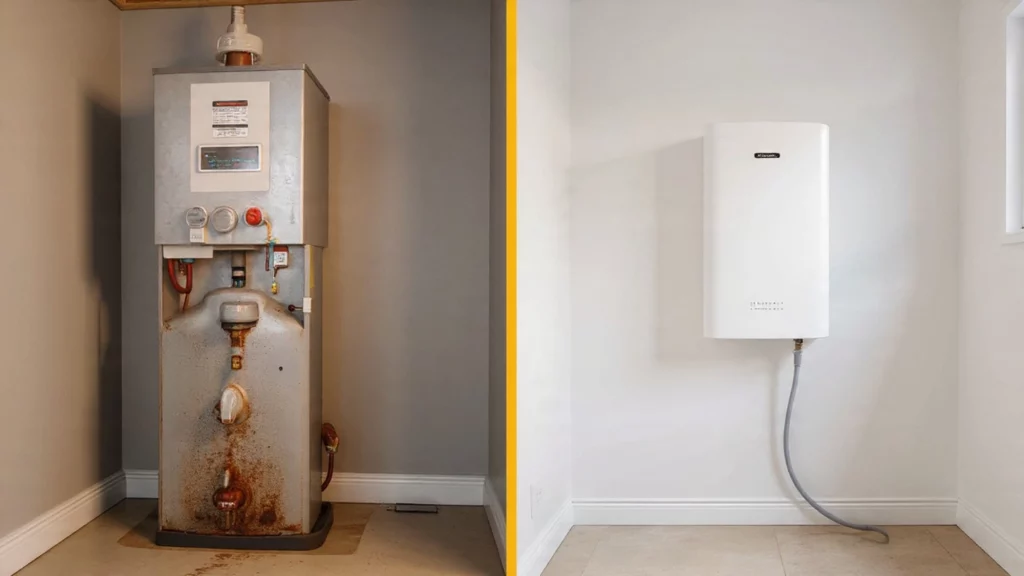
Key Takeaways
- Most tank water heaters last 8–12 years; tankless often last 15–20 years
- Leaks, rusty water, and inconsistent heat are top replacement signs
- Replacement costs vary widely by type, fuel, and installation needs
- Tankless systems cost more upfront but can save space and energy
- Proactive replacement avoids emergency pricing and water damage
How Long Water Heaters Typically Last
Average Lifespan by Type
| Water Heater Type | Typical Lifespan |
|---|---|
| Gas tank | 8–12 years |
| Electric tank | 10–15 years |
| Tankless (gas or electric) | 15–20+ years |
Why lifespan matters: internal corrosion, sediment buildup, and worn components increase failure risk after these ranges—often without obvious symptoms until a leak occurs.
Signs It’s Time to Replace Your Water Heater
Clear Warning Signs (Act Soon)
| Sign | What It Indicates | Replace or Repair? |
|---|---|---|
| Rusty or discolored hot water | Tank corrosion | Replace |
| Pooling water around base | Tank failure or crack | Replace immediately |
| Loud rumbling/popping | Heavy sediment buildup | Replace if persistent |
| Inconsistent hot water | Failing heating element/burner | Often replace |
| Unit age beyond lifespan | Higher failure risk | Replace proactively |
Cause → effect → outcome:
Sediment buildup → reduced efficiency and overheating → tank stress → leaks or rupture.
Replacement Costs: What You’ll Actually Pay
Typical Installed Cost Ranges (USA)
| System | Installed Cost Range |
|---|---|
| Gas tank water heater | $1,500–$3,500 |
| Electric tank water heater | $1,200–$2,800 |
| Tankless (electric) | $2,500–$5,000 |
| Tankless (gas) | $4,000–$8,500 |
What Drives Cost Differences
- Fuel type: gas vs. electric
- Capacity: gallons (tank) or flow rate (tankless)
- Installation upgrades: venting, gas line sizing, electrical capacity
- Location/access: attic vs. garage vs. basement
Tank vs. Tankless: Which Should You Choose?
Side-by-Side Comparison
| Feature | Tank Water Heater | Tankless Water Heater |
|---|---|---|
| Hot water delivery | Stored, finite | On-demand |
| Upfront cost | Lower | Higher |
| Lifespan | Shorter | Longer |
| Energy efficiency | Moderate | Higher |
| Space required | Larger | Compact |
| Simultaneous use | Limited by tank | Depends on sizing |
Real-World Scenarios
- Small household, low upfront budget: Tank
- High hot-water demand, long ownership: Tankless
- Limited space: Tankless
- Quick replacement needed: Tank (simpler install)
Capacity and Sizing Basics
Tank Size Guidelines (Typical)
| Household Size | Recommended Tank |
|---|---|
| 1–2 people | 30–40 gallons |
| 3–4 people | 40–50 gallons |
| 5+ people | 50–80 gallons |
Tankless Sizing Considerations
- Peak simultaneous usage (showers + appliances)
- Incoming water temperature
- Required flow rate (GPM)
Mistake to avoid: undersizing tankless units leads to temperature drops during simultaneous use.
Repair vs. Replace: A Simple Rule
| Situation | Best Choice |
|---|---|
| Minor part failure, unit <6 years | Repair |
| Repeated repairs, unit near lifespan | Replace |
| Visible tank corrosion or leaks | Replace |
| Rising energy bills + age | Replace |
If repairs exceed 30–40% of replacement cost, replacement usually delivers better value.
FAQs
Can a leaking water heater be repaired?
Tank leaks usually indicate structural failure; replacement is recommended.
Is tankless worth the extra cost?
Often yes for long-term owners with high demand or limited space.
Do tankless heaters provide endless hot water?
They provide continuous hot water within their flow capacity.
Should I replace before it fails?
Yes—planned replacement avoids water damage and emergency labor costs.
Does fuel type affect replacement timing?
Gas units often show corrosion earlier due to combustion byproducts.
Action Steps
- Check your unit’s age and capacity label
- Inspect for leaks, rust, and unusual noise
- Compare recent repair costs to replacement ranges
- Choose tank or tankless based on demand and budget
- Plan replacement before peak failure seasons
Conclusion
Knowing when to replace your water heater comes down to recognizing failure signs, understanding true replacement costs, and choosing between tank vs. tankless based on your home’s needs. Replacing proactively—before leaks or total failure—protects your home, reduces stress, and often lowers long-term costs. Use the tables and scenarios above to make a confident, well-timed decision.