How to Unclog a Drain: Natural Methods vs. Chemical Cleaners vs. Snaking
Clogged drains are one of the most common household plumbing problems in the USA. Knowing how to unclog a drain correctly depends on what’s causing the blockage and which method you choose—natural solutions, chemical cleaners, or mechanical snaking. Each option works best in specific situations and carries different risks, costs, and effectiveness levels. This guide compares natural drain unclogging methods, chemical drain cleaners, and drain snaking so you can choose the safest and most effective approach for your drain.
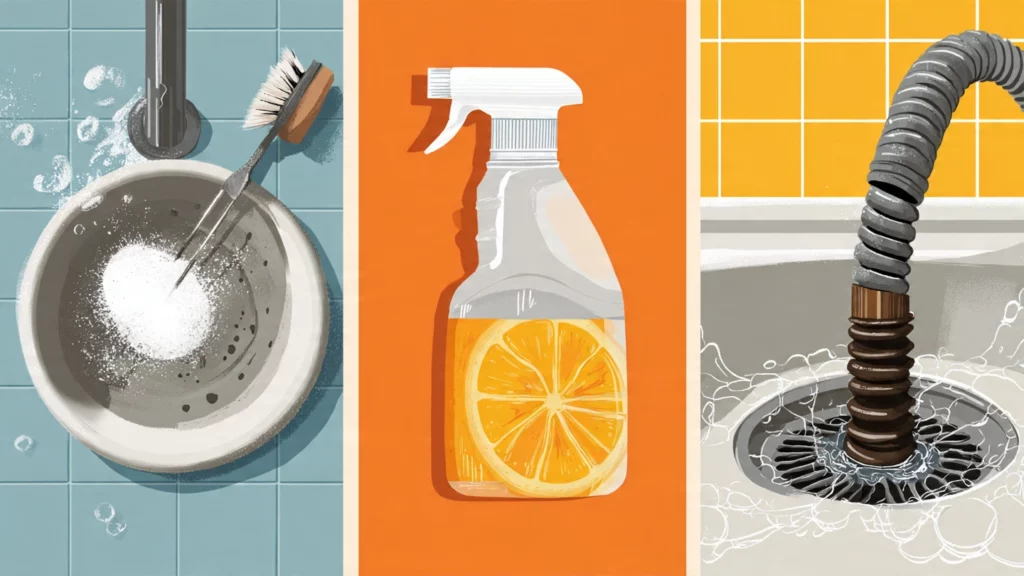
Key Takeaways
- Natural methods are safest for minor clogs and routine maintenance
- Chemical cleaners act fast but can damage pipes if misused
- Snaking is the most effective method for deep or stubborn clogs
- The wrong method can worsen clogs or harm plumbing
- Some clogs require professional tools beyond DIY options
Natural Methods to Unclog a Drain
Natural drain unclogging methods use non-toxic household materials and work best for early-stage or light clogs caused by grease, soap residue, or organic buildup.
Common Natural Drain Unclogging Methods
- Boiling water
- Baking soda and vinegar
- Dish soap with hot water
- Plunger (manual pressure)
How They Work (Cause → Effect → Outcome)
- Heat or mild chemical reactions loosen buildup
- Pressure dislodges soft blockages
- Flow improves without damaging pipes
Pros and Cons of Natural Methods
| Advantage | Limitation |
|---|---|
| Safe for pipes | Ineffective for solid clogs |
| Low cost | Requires multiple attempts |
| Environmentally friendly | Slow results |
Best Use Cases
- Kitchen sink grease buildup
- Bathroom soap scum
- Slow-draining sinks (not fully blocked)
Chemical Drain Cleaners: Fast but Risky
Chemical drain cleaners use corrosive or reactive chemicals to dissolve clogs. They are commonly sold as liquid, gel, or crystal formulas.
Types of Chemical Drain Cleaners
- Caustic (lye-based)
- Oxidizing (bleach-based)
- Acidic (less common, strongest)
How Chemical Cleaners Work
- Chemicals generate heat
- Organic matter breaks down
- Liquids flush remaining debris
Risks and Limitations
| Risk | Why It Matters |
|---|---|
| Pipe damage | Can weaken PVC and corrode metal |
| Health hazards | Fumes and splashes cause burns |
| Temporary results | Doesn’t remove solid obstructions |
When Chemical Cleaners Make Sense
- Hair clogs in bathroom sinks
- Organic buildup without standing water
- Occasional use, not routine maintenance
Important: Repeated use shortens pipe lifespan and may void plumbing warranties.
Snaking a Drain: Mechanical and Effective
Drain snaking uses a flexible metal cable to physically break through or retrieve clogs. It’s the most reliable DIY method for moderate to severe clogs.
Types of Drain Snakes
- Hand augers (sinks and tubs)
- Drum augers (longer lines)
- Toilet augers (curved for porcelain)
How Snaking Works
- Cable reaches clog
- Rotational force breaks blockage
- Debris is pulled out or pushed through
Effectiveness vs. Effort
| Factor | Snaking |
|---|---|
| Effectiveness | High |
| Skill required | Moderate |
| Pipe safety | Safe if used correctly |
| Cost | Moderate upfront |
Best Scenarios for Snaking
- Hair-packed drains
- Food debris beyond trap
- Repeated clogs in same drain
Comparison: Natural vs. Chemical vs. Snaking
| Method | Best For | Risk Level | Success Rate |
|---|---|---|---|
| Natural methods | Minor clogs | Very low | Low–Medium |
| Chemical cleaners | Organic buildup | Medium–High | Medium |
| Snaking | Deep clogs | Low–Medium | High |
What NOT to Do When Unclogging a Drain
- Mixing chemical cleaners (dangerous fumes)
- Using boiling water on fragile PVC repeatedly
- Forcing a snake aggressively (pipe damage)
- Ignoring recurring clogs (sign of deeper issue)
When DIY Isn’t Enough
Some drain clogs signal larger plumbing problems.
Signs You Should Stop DIY Attempts
- Multiple drains backing up
- Standing water that won’t drain
- Sewer odors
- Gurgling sounds from pipes
- Clogs returning within days
These indicate blockages beyond reach of household tools.
Frequently Asked Questions
Is baking soda and vinegar really effective?
Yes, for light clogs and maintenance, but not for solid obstructions.
Are chemical drain cleaners safe for old pipes?
No. Older metal and brittle PVC pipes are especially vulnerable.
How often can I snake a drain safely?
As needed, provided it’s done gently and correctly.
Can snaking damage pipes?
Only if forced aggressively or used incorrectly.
Why does my drain keep clogging?
Recurring clogs often mean buildup deep in the line or improper slope.
Action Steps
- Identify whether the drain is slow or fully blocked
- Start with natural methods for minor clogs
- Use chemical cleaners sparingly and cautiously
- Snake the drain if clogs persist
- Stop DIY attempts if symptoms worsen
Conclusion
Understanding how to unclog a drain means choosing the right method for the situation. Natural methods are safest for maintenance, chemical cleaners offer quick results with risks, and snaking delivers the most reliable fix for stubborn clogs. Using the wrong approach can damage pipes or delay proper repair. By matching the method to the clog, you protect your plumbing and restore proper drainage efficiently.