Extended Car Warranties: When the Math Works and When It Doesn’t
A $2,800 extended warranty on a late-model SUV can cost more than the repairs most owners will face over five years. But on the wrong vehicle, especially one loaded with air suspension, turbochargers, or complex infotainment, that same policy can pay for itself with a single repair visit. That tension is the entire debate.
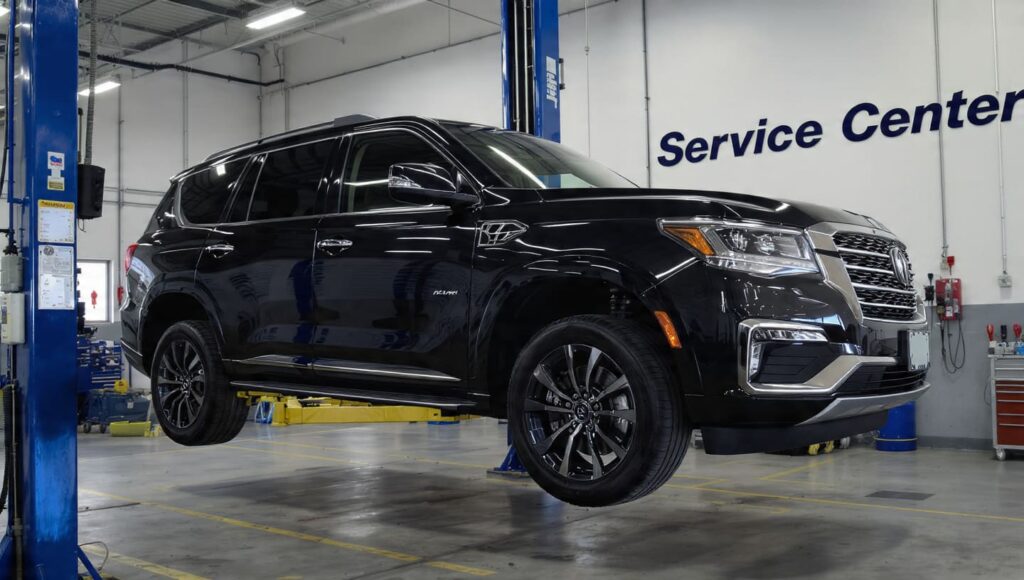
In this guide, I’ll break down how extended car warranties (properly called vehicle service contracts) actually work, what they typically cost, and which types of vehicles and owners benefit most. You’ll see real repair-price examples, a side-by-side cost comparison table, and specific data from J.D. Power and Consumer Reports reliability studies. By the end, you’ll know whether buying coverage makes financial sense for you, not just whether it sounds reassuring in the F&I office.
What You’re Really Buying With an Extended Warranty
First, clarity. An “extended warranty” is not an extension of the factory warranty in most cases. It’s a vehicle service contract that begins after the original manufacturer’s coverage expires.
Most new vehicles in the U.S. come with:
- 3 years / 36,000 miles bumper-to-bumper coverage
- 5 years / 60,000 miles powertrain coverage
Some brands go further. Hyundai and Kia offer 10 years / 100,000 miles on the powertrain for original owners.
Extended coverage typically adds protection for:
- Engine and transmission components
- Turbochargers and cooling systems
- Electronic modules
- Suspension components (sometimes optional)
- Advanced driver assistance systems (ADAS) sensors
And modern cars have a lot of those.
A single radar sensor for adaptive cruise control can cost $1,000–$1,500 installed. How much does a replacement infotainment head unit typically cost? Often north of $2,000. I’ve seen air suspension repairs exceed $3,500 on German SUVs.
That’s the appeal.
What It Costs vs. What You Might Actually Spend
Here’s where it gets real. Most manufacturer-backed extended warranties for mainstream vehicles cost $1,800 to $3,500, depending on:
- Term length (often 6–10 years total coverage)
- Mileage cap
- Deductible ($0 to $200 per visit)
- Vehicle type
Luxury brands often run higher — $3,000 to $5,000 isn’t unusual.
But how does that compare to expected repairs?
According to J.D. Power’s 2024 Vehicle Dependability Study, industry-wide problems per 100 vehicles have increased, particularly in infotainment and connectivity systems. Meanwhile, Consumer Reports’ reliability surveys consistently show large differences between brands — Toyota and Lexus are typically near the top; some European brands are below average.
Repair cost examples (national averages, independent shop pricing):
| Repair Item | Typical Cost (Parts + Labor) |
|---|---|
| Transmission replacement (CVT/automatic) | $4,000–$7,000 |
| Turbocharger replacement | $1,500–$3,000 |
| Infotainment system replacement | $1,200–$2,500 |
| Adaptive suspension repair | $2,000–$4,000 |
| Wheel bearing replacement | $400–$800 |

So yes — one major failure can exceed the price of coverage.
But statistically, many owners never experience one of these catastrophic repairs during the extended warranty period.
This is where probability matters.
Side-by-Side: Extended Warranty vs. Self-Funding Repairs
Let’s look at a simplified ownership scenario for a midsize SUV driven 12,000 miles per year.
Assume:
- 8-year / 100,000-mile manufacturer-backed warranty
- Cost: $2,800
- $100 deductible per visit
Now compare that to out-of-pocket repairs between years 4 and 8:
| Scenario | Major Repair? | Minor Repairs | Total Repair Cost | Warranty Cost | Net Outcome |
|---|---|---|---|---|---|
| A | None | $1,200 total | $1,200 | $2,800 | -$1,600 |
| B | Turbo failure | $1,000 other | $3,500 | $2,800 | +$700 |
| C | Transmission failure | $800 other | $6,000 | $2,800 | +$3,200 |
| D | Infotainment + suspension | $4,000 | $4,000 | $2,800 | +$1,200 |
In Scenario A — which is more common on highly reliable vehicles — you lose money.
In scenarios B through D, coverage makes financial sense.
If you want to estimate your depreciation and ownership costs, Edmunds’ True Cost to Own calculator is a solid place to start. It won’t predict failures, but it helps frame the bigger financial picture.
Vehicle Type Changes the Equation
Not all cars age the same.
According to long-term reliability data from Consumer Reports, brands like Toyota and Lexus consistently show fewer serious powertrain failures over time. That reduces the statistical value of extended coverage.
On the other hand:
- German luxury SUVs with air suspension
- Turbocharged performance cars
- Vehicles with complex hybrid systems (outside long hybrid battery warranties)
carry higher repair risk and higher parts pricing.
Hybrid batteries are a special case. Federal law mandates 8 years / 100,000 miles minimum coverage (10 years / 150,000 miles in CARB states). So you’re usually already protected there.
If you’re shopping used, reliability differences widen further. You can check complaint trends via the NHTSA database and safety ratings through the IIHS lookup tool before deciding.
From my experience covering press fleet vehicles and long-term test cars, complexity is the risk multiplier. The more electronic modules, adaptive dampers, cameras, and turbo plumbing involved, the more expensive things get after year five.
Third-Party vs. Manufacturer Coverage
This distinction matters more than most buyers realize.
Manufacturer-backed plans:
- Honored at franchised dealers nationwide
- Typically use OEM parts
- Transferable (sometimes boosts resale value)
- Cleaner claims process
Third-party warranties:
- Often cheaper upfront
- May limit repair locations
- Can require pre-authorization hurdles
- Financial stability varies by provider
I’ve seen excellent third-party experiences. I’ve also seen denied claims over fine-print exclusions.
Read the contract. Especially exclusions.
If you’re considering coverage, compare it against simply placing $2,800 in a high-yield savings account and self-insuring. That strategy works best for financially disciplined owners who can absorb a surprise $3,000 repair without stress.
When an Extended Warranty Makes Sense
It tends to make sense if:
- You’re buying a used luxury vehicle past factory coverage
- The car includes air suspension or high-cost tech systems
- You plan to keep the vehicle well beyond five years
- You prefer predictable monthly budgeting
- You have limited emergency savings
It rarely makes sense if:
- You’re leasing
- You trade vehicles every 3–4 years
- You’re buying a top-tier reliability model
- You have strong cash reserves
This is less about fear and more about risk tolerance.
Some buyers sleep better knowing they’ve capped exposure. Others would rather keep the cash.
Both approaches can be rational.
The Bottom Line on Extended Car Warranties
An extended warranty is not automatically a waste of money. It’s also not automatically smart.
For reliable mainstream vehicles, the math often favors self-insuring. Put the money aside and you’ll likely come out ahead.
For high-complexity or historically less reliable vehicles, coverage can act as financial shock absorption. One transmission failure changes the ledger immediately.
The key is separating emotion from probability. Look at brand reliability data. Check common failure points. Estimate how long you’ll keep the car. And be honest about your risk tolerance.
Cars have become rolling computers. That increases comfort and safety — but it also raises the stakes when something fails.
If you’re the kind of owner who wants certainty, an extended warranty can buy peace of mind. If you’re comfortable playing the averages, keeping the cash may be the smarter long-term bet.
Either way, run the numbers first. That’s what experienced buyers do.
References
J.D. Power — 2024 U.S. Vehicle Dependability Study (jdpower.com)
Consumer Reports — Annual Auto Reliability Survey (consumerreports.org/cars)
National Highway Traffic Safety Administration (NHTSA) Recalls Database — https://www.nhtsa.gov/recalls
Insurance Institute for Highway Safety (IIHS) Safety Ratings — https://www.iihs.org/ratings
Edmunds True Cost to Own Calculator — https://www.edmunds.com/tco.html
U.S. Department of Energy Fuel Economy Resource — https://www.fueleconomy.gov